Data Protection in 2025: A Pivotal Digital Transformation
Explore how data protection is evolving in 2025. Learn why zero-trust architecture, encryption-in-use, and privacy-enhancing tech are redefining secure analytics.


Data Protection in 2025: A Pivotal Digital Transformation
Happy Lunar New Year. This Year is the year of the Wood Snake, symbolizing renewal and regrowth. Data protection is no exception. It’s time to shed our fragile, gossamer skin in favor of a more robust approach. Traditional perimeter protection methods are failing us. The threat actors eventually get in. Data gets exposed. Organizations lose trillions each year as a result. Add to that mounting global regulatory pressures and stringent customer demands, and we have a perfect storm.
As Thich Nhat Hanh famously said, “No mud, no lotus”–a way of saying that our pain and discomfort is ultimately a catalyst for growth. New technological advances in cryptography, AI, and zero-knowledge frameworks are the lotus seeds sprouting from the mud, being watered by that perfect storm. Let’s dig in.
The Growing Importance of Data Protection in the Age of Cloud Computing
The rapid rise of cloud and edge computing has ushered in a new era of scalability and efficiency for businesses. However, it has also exposed organizations to increasingly sophisticated cyber threats. The stakes are high, with data breaches and cyberattacks becoming all too common. Traditional approaches to cybersecurity just don’t cut it anymore.
AWS, for instance, deflects nearly a billion hacking attempts every single day.
Recent headlines have illustrated that even prominent security companies and major enterprises are not exempt from security breaches; notable instances include UnitedHealth, Okta, and 23andMe. These three incidents alone total more than $4.5B in losses and underscore the inadequacy of relying solely on perimeter protection. Cybercriminals will invariably discover methods to circumvent external defenses.
2025 as the Turning Point for Enterprise Data Security
The year 2025 signifies a critical milestone for enterprises and the vendors that serve them as four converging trends—massive data proliferation, remote work, global privacy regulations, and AI-powered cyberthreats—demand sweeping changes in how businesses manage and protect data.
1. The Cloud’s Dominance and Exponential Data Growth
Enterprises have embraced the cloud for its agility and scalability, but protecting sensitive workloads remains a growing challenge. We typically think of industries like financial services and healthcare as primary targets. However, most of this is employee and customer data, which most organizations commonly hold. Only 39% of sensitive data is encrypted because, historically, we’ve had to trade privacy and security for utility and value. Thanks to advances in privacy-enhancing technologies, this is no longer the case.
- Sensitive data comprises nearly half (47%) of all cloud-stored data.
- Yet less than 10% of IT professionals say that more than 80% of their sensitive data in the cloud is encrypted.
2. The Permanent Shift to Remote Work
Remote work is here to stay, but it brings challenges like unsecured devices, weak home network security, and a surge in phishing attacks. Protecting these decentralized environments requires more than office- and perimeter-based security measures.
The rise of remote work has redefined enterprise security:
- 72% of organizations report an uptick in incidents related to remote work.
- Home networks are 2.5x times more vulnerable than corporate networks.
This paradigm shift calls for advanced security strategies prioritizing protection without compromising productivity.
3. The Rise of AI-Driven Threats
The growing use of AI poses unprecedented challenges, making real-time threat detection and predictive security must-haves for organizations. Attackers are now leveraging advanced technologies, making attacks faster and more sophisticated. GenAI is increasing efficiency everywhere, and blackhat hackers are no exception. In addition to the risks from IoT devices, insider threats, and advanced fraud techniques, it’s clear that traditional protection methods are lagging behind.
The AI arms race isn’t limited to corporate innovation; attackers are leveraging AI to amplify their attacks:
- AI-powered cyberattacks have surged by an alarming 1,400% since 2021.
- There has been a 3,000% increase in Deepfakes in the past year alone.
4. Increasing Regulatory Pressure
In 2025, if you have a global footprint, you are, by default, in a highly regulated industry. Global regulatory bodies are upping the ante with stricter frameworks like GDPR, HIPAA, and CCPA.
Global regulatory frameworks are putting additional pressure on enterprises to protect data for compliance-related reasons. Cybersecurity measures alone won’t help here, where the requirements are much more nuanced and controls much more granular.
- There has been a 650% increase in regulated data in the past four years alone.
- GDPR fines have already surpassed $5 billion.
- Non-compliance costs between $14 and $40 million.
And it’s not just large enterprise organizations that are feeling the pinch. The trickle-down effect is felt as businesses of every size seek partnerships with larger organizations.
The New Data-Centric Security Paradigm
Faced with growing risks and evolving threats, businesses need to prioritize data-centric security strategies that protect information end-to-end. The old “castle and moat” model is like locking your front door while leaving windows wide open. The future lies in data-centric security, focusing on protecting the data itself, wherever it resides.
Thankfully, new technologies are emerging that can help keep data safe while maximizing utility and value. Imagine each piece of data encased in its own unbreakable safe. This approach ensures flexibility for innovation while safeguarding sensitive information.
Here’s the 1-2-3 punch 🥊 coming to a software stack near you in 2025:
1. Zero-Trust Architecture Becomes the Gold Standard
Zero-trust operates on the principle of “never trust, always verify,” requiring verification for every access request, whether internal or external. Every access request undergoes rigorous authentication, assuming potential compromise. Continuous authentication prevents breaches and accidental exposure in real- time, while micro-segmentation ensures restricted access to systems based on the user’s roles. Field-level data access controls will see increased adoption as organizations face mounting challenges.
- 99% of cloud data accessors have excess, unnecessary privileges.
- 76% of businesses adopting zero-trust report significant reductions in breaches.
2. Advanced Encryption-In-Use Strategies Take Center Stage
Encryption is no longer optional; it is fundamental for secure data handling. Traditional encryption protects data at rest and in transit, but what about during active processing? Historically, this has been impossible.
Breakthroughs in privacy-enhancing encryption-in-use technology, such as Homomorphic Encryption (HE) and Searchable Encryption (SE), ensure data remains safe at all times, even during processing and analysis. By adopting encryption-in-use, companies can drastically reduce the risks surrounding sensitive data.
- Breach impacts drop by 65% when advanced encryption is employed.
3. AI-Powered Security Monitoring
Continuous monitoring of data access patterns allows for early detection of anomalies. AI-powered tools can identify threats before they escalate, enhancing response times.
- Organizations utilizing AI for threat detection have reduced their incident response times by up to 70%, enabling quicker mitigation of potential breaches.
AI-driven monitoring ensures businesses are always one step ahead, even in a rapidly shifting threat landscape.
The High Cost of Complacency
Failing to invest in robust data protection measures can result in severe repercussions.
Financial Fallout
- The average cost of a data breach is $4.45 million.
- The average cost of a megabreach is a whopping $332 million.
- 60% of small businesses fail within six months of a cyberattack.
Loss of Trust and Reputation
Consumers are increasingly protective of their privacy.
- 87% of customers will stop doing business with a company after a breach.
- Brand recovery post-breach can take more than 12 months.
Enterprises that prioritize proactive security measures can maintain their hard-earned customer loyalty.
Lost Deals and Partnerships
Falling behind on effective data handling can significantly impact a company’s growth and ability to form valuable partnerships. Businesses that fail to leverage data effectively risk losing lucrative deals and partnerships because customers and partners increasingly have stringent requirements for data management in vendor and partner relationships.
Operational Efficiency Takes a Hit
When we leave valuable data encrypted at rest, data is not integrated into decision-making, leading to slower processes, missed opportunities, and higher operational costs.
- 76% of businesses experience diminished cross-departmental collaboration due to data silos.
- Data silos directly impede innovation, with 74% of executives acknowledging that these silos hamper their innovation initiatives.
- Companies lose between 20% to 30% in revenue annually due to inefficiencies associated with data silos.
The ripple effect of not using data effectively weakens competitive advantage, slows innovation, and erodes stakeholder confidence over time.
Final Thoughts
The year 2025 marks the transformation of enterprise data protection into a strategic imperative rather than an IT afterthought. Proactive companies leveraging AI, zero-trust principles, and advanced encryption will not just survive—they’ll thrive.
Now is the time to reimagine your data protection strategy with cutting-edge tools and a data-centric focus. Safeguard your organization, its reputation, and your customers today to ensure sustainable growth tomorrow.
Ship privacy-preserving search in a week, not a year.
Blind Insight's searchable encryption platform starts at $9/mo. Try it, break it, keep your data encrypted the whole time.
Keep reading
The Evolution of the EDPB’s Pseudonymization Guidance
Explore the new EDPB pseudonymization guidance and discover how data privacy laws are shaping compliance strategies.
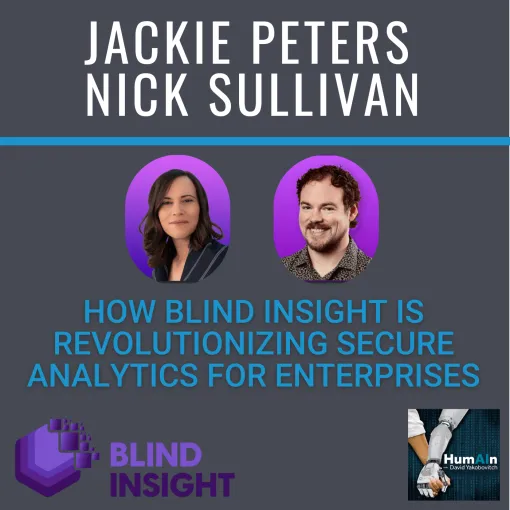
HumAIn Podcast: The Data Dilemma: How Blind Insight is Revolutionizing Secure Analytics for Enterprises
Data protection, or data utility? The trillion-dollar question. Blind Insight co-founders Nick Sullivan and Jackie Peters discuss this tradeoff, and how technologies like Blind Insight's searchable encryption are helping organizations find a secure and private middle-ground.
Blind Insight Named Top Woman-Led Startup
Blind Insight named top women-led startup by Integra Groupe.