The Finalization of Section 1033 "Open Banking" Rule
Discover the opportunities of open banking! Learn how financial institutions and software vendors can overcome challenges, foster trust, and drive innovation in a more connected and secure digital financial ecosystem.

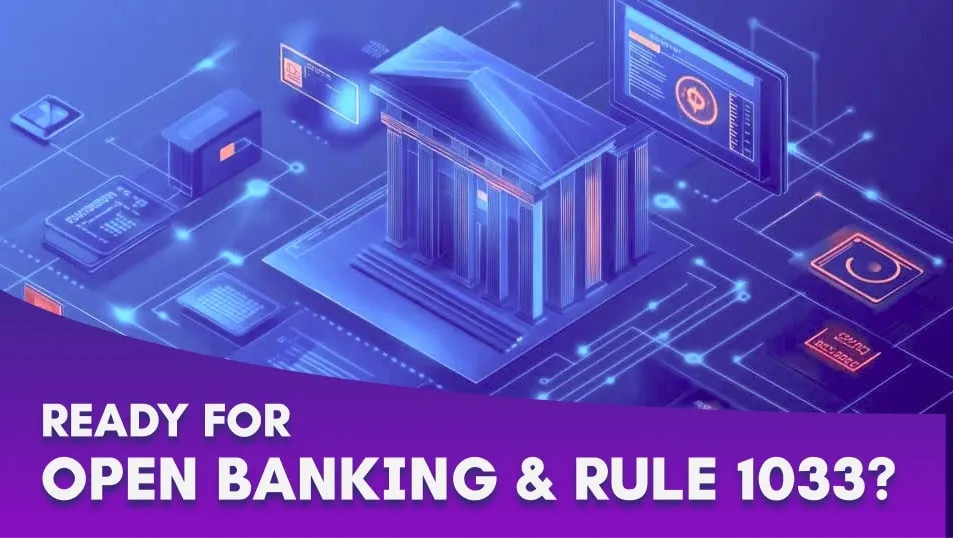
The Consumer Financial Protection Bureau (CFPB) has finalized its groundbreaking “Personal Financial Data Rights” rule, commonly referred to as the “Open Banking” rule. This regulation, under Section 1033 of the Dodd-Frank Act, represents a pivotal step in reshaping the financial services landscape in the United States. By granting consumers greater control over their personal financial data, the rule fosters transparency and propels innovation within the financial ecosystem.
If you’re a software vendor developing products for financial institutions, this is a pivotal moment. Understanding and preparing for Section 1033 is critical to succeeding in this evolving environment.
What Is Section 1033 / The Open Banking Rule?
Section 1033 mandates that financial institutions provide consumers with access to their own financial data, enabling them to share it securely with authorized third parties. The CFPB’s final rule compels banks, credit card issuers, and digital wallets to develop secure digital interfaces that facilitate controlled data sharing.
Key highlights from the rule include the following requirements for financial institutions and third parties:
- Data Accessibility: Consumers can request and share financial data for free, such as account balances, transaction details, payment initiation data, and account verification.
- Restricted Data Use: Third parties can only use this information for the specific purposes authorized by the consumer, such as initiating a payment or providing financial insights.
- Security Enhancements: The rule mandates the adoption of secure Application Programming Interfaces (APIs), effectively eliminating riskier data access methods like screen scraping.
By enforcing these standards, the regulation seeks to drive market competition while ensuring data security and consumer protection.
Implications for Financial Institutions and Software Vendors
Compliance-First Technological Adaptation
As we move consumer protection and data privacy into the forefront of the discussion it will inevitable be the responsibility of the data provided and data recipient to ensure they are in compliance and protecting the customer. If this is missed, the fintechs may be excluded from the ecosystem a d thus causing significant impacts. Financial institutions must upgrade their digital infrastructure to comply with the new requirements. This means investing in standardized APIs, strong encryption, access controls, and monitoring, that enable seamless and secure data exchange while adhering to stringent security protocols.
For software vendors, this is an opportunity to create cutting-edge solutions that help financial institutions modernize their systems. Vendors that prioritize API-driven technology and frictionless data integration will be best positioned for success.
Compliance and Deadlines
The CFPB has set phased compliance deadlines:
- Large financial institutions: Compliance required by April 1, 2026.
- Smaller financial institutions: Compliance required by April 1, 2030.
Software providers must ensure their products align with regulatory expectations, offering future-proof solutions that adapt to evolving compliance needs.
The Future of Financial Data Handling
The phasing out of screen scraping signifies a strong industry shift toward API-based financial data exchange. Secure APIs allow for faster, more reliable, and regulated data-sharing mechanisms, benefiting both financial institutions and fintech providers.
For software developers, this is a chance to differentiate their offerings by prioritizing:
- Scalable API Solutions: Ensure financial institutions can easily integrate and expand capabilities as needed.
- Proactive Compliance Measures: Embed privacy safeguards, encryption protocols, and access controls in every solution.
- Interoperability & Standardization: Align products with industry-wide standards to streamline integration across financial platforms.
Action Steps for Software Providers
Following suit with many other privacy regulations 1033 is somewhat vague. Large financial institutions are actively collaborating to set specific standards. To stay ahead of the regulatory curve and capitalize on this transition you can :
- Deepen Compliance Knowledge
- Engage with legal experts to fully understand the implications of Section 1033.
- Monitor ongoing regulatory updates to maintain long-term compliance.
- Assess and Upgrade Existing Technology
- Conduct a comprehensive audit of current data-sharing processes.
- Identify and address gaps in security, accessibility, and performance.
- Enhance Security Frameworks
- Implement multi-layered encryption, access control mechanisms, zero-trust frameworks and continuous security monitoring.
- Ensure compliance with established frameworks like the Gramm-Leach-Bliley Act (GLBA) and FTC Safeguards Rule.
- Collaborate with Industry Partners
- Join financial standards organizations to stay ahead of interoperability trends.
- Work closely with banking institutions to develop products that meet real-world needs.
Learn more about how to build an enterprise-ready data posture.
The Road Ahead: Open Banking’s Potential
While the transition to open banking presents challenges, it also offers immense benefits—enhanced consumer trust, greater financial innovation, and a more interconnected financial ecosystem.
For software vendors, this moment represents a competitive advantage in shaping the future of financial services. Companies that take a proactive, security-first approach to compliance and API development will be best positioned to lead in this new era.
Ready to take the lead in open banking? Discover how Blind Insight can help you build secure, scalable solutions that meet regulatory demands while driving innovation.
Ship privacy-preserving search in a week, not a year.
Blind Insight's searchable encryption platform starts at $9/mo. Try it, break it, keep your data encrypted the whole time.
Keep reading

Why School Districts Are Racing to Adopt Privacy-Preserving Technologies: A Response to Rising Data Protection Demands
School districts urgently need privacy-preserving tech after a major 2024 data breach. Learn how encryption and zero-trust architectures protect student data, ensure compliance, and rebuild trust in K-12 EdTech.
Turn New Privacy Rules Into Your Competitive Advantage: The EDPB Pseudonymization Breakthrough
What's in a name? How the EDPB's recent guidance on pseudonymization pave the way for better, smarter, faster data sharing.
Practical Implications of the New EDPB Pseudonymization Guidelines
Learn how the proposed EDPB guidelines may impact your organization in part two of this three-part series.